
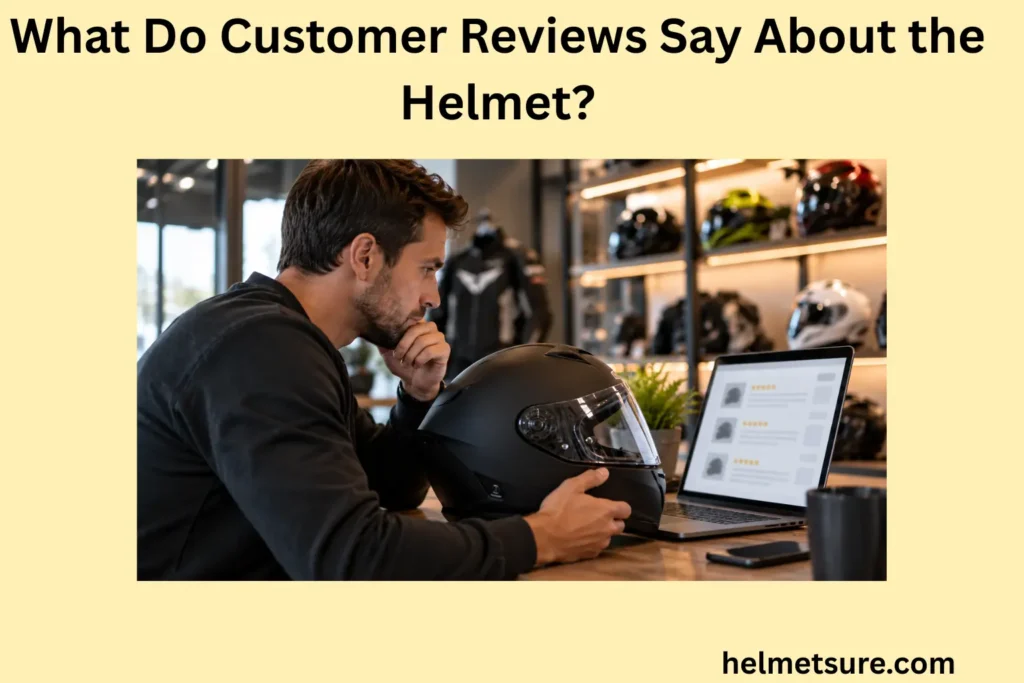
What Do Customer Reviews Say About the Helmet?
Customer reviews reveal the helmet’s strongest owner-reported patterns when repeated comments about fit, comfort, durability, usability, and value are separated from isolated anecdotes and checked against the size, model, review date, and ownership context.
The useful question is not whether a helmet has a high average rating. It is whether detailed, credible customer reviews repeatedly describe the same experience—and whether that experience applies to the exact model, size, generation, and use case being considered. Feedback also becomes more relevant when owners used the helmet for its documented intended use rather than for a different activity.
Review Consensus as a Pattern Rather Than a Single Owner’s Experience
Review consensus is a repeated pattern across credible owner feedback, not the opinion expressed in one unusually positive or negative review. A defensible analysis records the review pool first, then codes specific attributes such as fit, padding, ventilation, retention, durability, and value instead of treating star ratings as conclusions.
Before interpreting a helmet’s reviews, record:
Review Evidence Quality Checklist
This scope statement controls every later claim. If the dataset is small, dominated by one platform, or mixed across product revisions, confidence should be described as limited rather than hidden behind a precise-looking average.
Why repeated comments across multiple owners carry more weight than one extreme review
The strongest pattern is not necessarily the loudest. A dramatic one-star account or enthusiastic five-star testimonial can attract attention while offering little information about size, head shape, use duration, climate, or product version. By contrast, several measured comments describing the same pressure point, buckle behavior, or padding change provide a more useful basis for a buyer decision.
Repeated wording on one marketplace still deserves caution. Reviews may be duplicated, incentivized, copied between variants, or attached to a listing that combines different products. The FTC’s consumer-review guidance[1][2] distinguishes ordinary consumer reviews from testimonials and addresses fake, false, incentivized, insider, and suppressed reviews. Cross-platform recurrence and specific ownership detail therefore matter more than repetition alone.
Consensus means directionally consistent evidence, not unanimity. The correct language should match the dataset: “an isolated report,” “multiple owners,” “a recurring cross-source pattern,” or “mixed evidence.” Terms such as “everyone,” “most owners,” and “common defect” require enough systematically examined evidence to support them.
How verified ownership, review volume, and review recency affect confidence
Verified ownership, sufficient review volume, and recent feedback increase confidence that a review pattern reflects current owner experience. A verified-purchase badge can strengthen the link between a reviewer and a transaction, but platform verification methods differ and the badge does not make every conclusion accurate or representative.
Volume matters because a larger relevant pool gives recurring themes more opportunity to appear and contradictory experiences more opportunity to surface. However, relevance comes before raw count. Two hundred reviews that combine different helmet models, sizes, or generations may be less useful than a smaller set clearly tied to the exact product.
Recency matters when a manufacturer changes shell sizing, padding, straps, a buckle, adjustment hardware, finish, or accessory compatibility. Older reviews can document the former version, but they should not be silently applied to revised production. Record model identifiers and review dates, then check manufacturer documentation for changes before combining the evidence.
Unverified reviews should not be discarded automatically. Detailed long-term reports from specialist retailers, owner forums, clubs, or community groups can add useful context. Their evidential weight depends on product identification, ownership detail, independence, and consistency with other sources—not merely on the platform label.
Why fit-related complaints require more context than obvious manufacturing defects
Fit complaints require head-shape, shell-size, adjustment, and sizing-chart context because an uncomfortable helmet is not automatically a defective helmet. Two people with the same head circumference can experience different forehead pressure, temple pressure, gaps, or movement because their head shapes differ. A reviewer can also choose the wrong size, measure incorrectly, wear the helmet in the wrong position, or expect an adjustment dial to compensate for an incompatible shell.
A useful helmet fit analysis separates four possibilities:
- Size mismatch: The selected size does not match the wearer’s measured circumference or the manufacturer’s current chart.
- Head-shape mismatch: Circumference is plausible, but shell geometry creates localized pressure or gaps.
- Adjustment or setup problem: The correct base size is worn too high, tilted, loosely strapped, or incorrectly adjusted.
- Possible product problem: A component arrives broken, detached, misaligned, or unable to operate as documented.
“Runs small” and “wrong shape for me” are not interchangeable findings. A repeated fit complaint becomes more diagnostic when reviewers provide measurements, chosen sizes, pressure locations, adjustment attempts, and whether another size or model resolved the problem. Broken hardware or detached components can be clearer quality signals, but even those require confirmation that shipping damage, misuse, or the wrong product variant was not involved.
What Do Owners Praise Most About the Helmet?
The helmet’s strongest owner-approved attributes are the positive experiences that recur across independent reviews and remain consistent across relevant sizes, use cases, or ownership periods. Praise should be ranked by recurrence, detail, and buyer significance—not by emotional wording or the number of five-star ratings attached to vague comments.
Comfort features owners repeatedly mention after extended wear
First-use softness is weak evidence of sustained comfort. Padding may settle, heat can build, sweat can change the interior feel, and a shape mismatch may only become obvious after time. Give greater weight to reviews that identify duration, activity, climate, fit, and whether comfort changed during ownership.
Comfort remains partly subjective, but a recurring pattern can still be meaningful. If owners with compatible sizing and similar use repeatedly report stable support and few pressure points, that is stronger evidence than a simple “comfortable” label. If praise comes only from brief try-ons, classify long-wear comfort as unconfirmed.
Fit and adjustment features that help users achieve a secure feel
Positive fit reviews matter most when owners explain which adjustment features helped the helmet achieve a stable, secure position. Depending on helmet type, useful evidence may concern a rear cradle, fit dial, interchangeable pads, strap dividers, buckle, ratchet, jaw pads, shell adjustment, or multi-point harness.
Separate base sizing from fine adjustment. The correct shell size and compatible internal shape create the foundation; adjustment features then refine contact and stability. An easy-to-turn dial can improve convenience without proving that the helmet fits correctly, while a broad adjustment range cannot make one geometry suitable for every head.
Look for comments that connect a feature to an outcome: the helmet stayed level, resisted unwanted movement, retained its setting, or remained stable with approved eyewear or other equipment. General statements such as “fits great” carry less diagnostic value because they do not reveal what created the fit.
Ventilation, weight, or padding qualities that improve everyday usability
Ventilation, low perceived weight, and effective padding improve everyday usability when those benefits recur across real-use owner reviews. These attributes should be separated because each has a different mechanism and context.
- Ventilation: Useful reports describe airflow, heat buildup, sweat, fogging, climate, activity intensity, and movement speed. Vent count alone does not establish cooling performance.
- Weight: Published mass is an objective specification, while perceived weight also depends on balance, fit, posture, helmet size, and attached accessories.
- Padding: Owners can describe support, moisture feel, pressure distribution, removability, cleaning, and how the padding changes with use.
Positive evidence becomes stronger when owners identify the conditions. A helmet praised in cool, fast-moving use may feel different in slow, humid conditions. A published weight may also apply to only one size or configuration, so compare the exact variant rather than repeating a single catalog number as universal.
Design and finish details that owners believe justify the helmet’s price
Design and finish praise supports perceived value when owners consistently connect specific materials, details, or features with a higher-quality ownership experience. Useful evidence might concern clean trim alignment, tactile hardware, a reliable visor mechanism, well-executed liner attachment, secure accessory integration, finish consistency, or controls that remain easy to operate.
Separate appearance from function. A color or graphic can increase satisfaction without proving construction quality. Likewise, an expensive-looking finish may scratch easily or a plain helmet may prove durable. The most persuasive reviews explain which detail improved actual use and whether that benefit lasted.
Feature praise should also match the exact variant. Marketplace listings sometimes combine different colors, regional versions, or accessory packages. Verify that the praised component is included on the helmet being evaluated before using it to justify the price.
Recurring Praise Matrix
Use the matrix after coding the review sample. Do not assign a recurrence level until the same theme appears in multiple relevant reviews.
Recurring Praise Matrix
| Positive Theme | Evidence to Extract | Stronger Pattern | Essential Context | Buyer Significance |
|---|---|---|---|---|
| Comfort | Pressure distribution, hotspots, session experience | Detailed praise after longer wear | Fit, duration, climate | High when it affects consistent use |
| Fit and adjustment | Feature used and stability outcome | Repeated success after correct sizing | Head shape, shell size, setup | High because position matters |
| Ventilation | Airflow, heat, sweat, fogging | Similar reports in comparable conditions | Temperature, humidity, speed | Medium to high by activity |
| Weight | Measured mass and perceived balance | Repeated low-fatigue comments over time | Size, posture, accessories | Medium; highly use-dependent |
| Padding | Support, contact, moisture, change over time | Comfort retained beyond first use | Ownership period, cleaning | Medium to high |
| Design and finish | Specific functional or visual detail | Consistent quality across variants | Colorway, version, use period | Medium; partly preference-based |
Which Complaints Appear Most Often in Customer Reviews?
The most meaningful customer complaints are the weaknesses that recur across independent owners and remain relevant after accounting for size selection, usage, product variant, and personal preference. Every major complaint should be classified by recurrence, likely cause, context, consequence, and whether an authoritative source must verify it.
Sizing inconsistencies that cause the helmet to feel unexpectedly tight or loose
When reading helmet size complaints, separate three patterns:
- Boundary-size uncertainty: The wearer falls near the edge between two published sizes.
- Shape-related tightness or looseness: Circumference is plausible, but pressure or gaps concentrate in one direction.
- Possible chart inconsistency: Multiple correctly measured owners experience the same directional mismatch within the same model generation.
Do not recommend that every buyer size up or down because several reviewers used those words. Check how they measured, whether the chart changed, which shell size they bought, and whether the complaint disappeared after trying a different size or instead followed the helmet’s shape.
Strap, buckle, or adjustment-system complaints that affect usability
Strap, buckle, or adjustment complaints matter when owners repeatedly report difficulty securing, adjusting, releasing, or keeping the helmet correctly positioned. Classify the report before judging it: unfamiliar operation, limited adjustment range, strap slippage, buckle discomfort, accidental release allegation, broken hardware, or equipment interference are different problems.
Timing helps identify significance. An awkward buckle on first use may be a learnability issue that the instructions resolve. A setting that repeatedly slips after correct adjustment is a functional usability concern. A component that cracks or detaches during normal use is a possible durability or safety-adjacent concern requiring closer verification.
Check the manufacturer’s setup instructions whenever operation is disputed. A review that describes correct routing, adjustment, and use carries more weight than one that assumes all retention systems work the same way. Preference for one buckle style should not be mislabeled as failure.
Padding or liner issues reported after repeated use
Padding and liner complaints become durability evidence when owners consistently report compression, movement, detachment, odor retention, or loss of comfort after repeated use. Ownership duration, frequency, climate, sweat exposure, cleaning method, and component type determine what the report means.
Comfort padding and an impact-management liner are not the same. Removable fabric pads may influence fit, moisture control, and comfort; a protective foam or other energy-management structure performs a different role. Compression of a comfort pad should not automatically be described as structural failure, while damage to a protective component should not be treated as a routine comfort complaint.
Compare normal break-in with premature deterioration. Mild settling may be expected within the maker’s fit guidance, but repeated early detachment, severe flattening, persistent movement, or loss of stable fit deserves more attention. Verify whether the part is replaceable and use only manufacturer-approved components and care methods.
Cosmetic and finish problems that may indicate quality-control variation
Cosmetic and finish complaints suggest possible quality-control variation only when similar flaws recur across independent helmets rather than appearing as isolated shipping or handling damage. Code scratches, paint irregularities, adhesive residue, loose trim, misalignment, surface bubbling, and packaging damage separately.
A repeated flaw in the same location across current-model units is a stronger quality-control signal than different blemishes reported sporadically. Still, cosmetic variation does not by itself establish compromised protection. The functional consequence must be evaluated separately.
Unboxing photos, seller identity, packaging condition, and review date can help distinguish factory finish variation from transit damage or a used product sold as new. Unusual labels, construction discrepancies, or packaging can also trigger an authenticity check, but low ratings or rough appearance alone cannot prove counterfeiting.
Complaint Frequency Classification
Complaint Frequency Classification
| Complaint Theme | What Establishes Recurrence | Likely Category | Context Required | Typical Buyer Significance |
|---|---|---|---|---|
| Tight or loose sizing | Multiple measurement-based reports on the same version | Fit or sizing | Circumference, shape, size chart | High when exchanges are difficult |
| Strap or buckle | Same operational problem after correct setup | Usability or hardware | Instructions, use duration | Medium; high if retention may be affected |
| Padding or liner | Similar change after repeated normal use | Comfort, care, or durability | Component role, time, maintenance | Medium to high |
| Finish or cosmetic | Same flaw across independent units | Quality-control variation | Shipping, seller, colorway | Low to medium unless functional |
| Structural or safety-adjacent | Repeated model-matched allegations | Escalation required | Exact identity and official verification | High, but reviews alone are insufficient |
What Do Reviews Reveal About the Helmet’s Fit and Sizing?
Review evidence about fit and sizing is most useful when owner experiences are matched to the published size chart, head dimensions, head shape, and adjustment range. Fit evidence should help a buyer decide where to start, what uncertainty remains, and whether another model shape may be more appropriate—not prescribe a universal size change.
Whether most owners describe the helmet as true to the published size chart
Evidence can support one of three conclusions:
- Strong chart alignment: Detailed, current-model reports generally match the published range.
- Mixed chart alignment: Owners near boundaries or with different head shapes report conflicting outcomes.
- Insufficient evidence: Reviews omit measurements, merge variants, or provide too little detail.
Buyers near a size cutoff deserve extra caution because two correct measurements can differ slightly and brands may advise different actions at the boundary. Use the manufacturer’s measurement method and current chart. Do not treat a reviewer’s preferred looseness or tightness as the definition of correct fit.
Which head shapes appear to experience the best or worst fit
Head-shape conclusions should identify recurring compatibility patterns only when reviewers provide enough detail to distinguish shape from simple size mismatch. The most informative reports describe where pressure or space occurs: concentrated forehead pressure, temple pressure, side gaps, front-to-back gaps, or persistent rotation despite plausible sizing.
Several reports showing the same contact pattern can suggest a shape-compatibility issue, but the language should remain cautious unless the manufacturer publishes a head-shape description. Reviewer labels such as round, intermediate oval, or long oval are self-reported and may not use a consistent method.
Padding can temporarily mask mismatch, and normal break-in should never be used to justify severe pain, numbness, or a helmet that cannot remain correctly positioned. A different circumference size can solve overall tightness or looseness; it usually does not change the fundamental shell geometry. When localized pressure persists at the correct size, another model shape is often the more sensible comparison.
How adjustment systems change the fit after the correct shell size is chosen
Adjustment systems refine fit after the correct base size is chosen; they do not replace correct shell sizing or compatible head shape. Reviewers should explain whether a cradle, dial, pad set, strap divider, shell mechanism, or other system improves stability within its intended range.
Positive evidence connects adjustment to a repeatable result: the helmet stays level, the setting does not slip, pressure remains distributed, and the required coverage is preserved. Negative evidence identifies the exact limit: insufficient range, uneven pressure, difficult operation, loosening during use, or interference with hair, eyewear, hearing protection, or another approved item.
Easy operation and secure fit are not identical. A convenient dial can still leave a shape mismatch, while a less intuitive system may work securely after correct setup. Consult the model instructions before deciding whether a complaint reflects product design or unfamiliar adjustment.
When repeated pressure-point complaints suggest a shape mismatch rather than poor construction
Repeated pressure points suggest a head-shape mismatch when discomfort appears consistently in the same regions despite correct sizing and normal helmet condition. Broad, uniform tightness is more consistent with an undersized helmet; localized forehead or temple pain with gaps elsewhere more strongly suggests geometry incompatibility.
This interpretation becomes more credible when multiple reviewers provide measurements, identify the same pressure region, use the current model, and report that normal adjustment did not solve the issue. It remains a fit-compatibility finding—not proof of defective materials or construction.
Never recommend removing, sanding, compressing, cutting, or reshaping protective liner material to relieve pressure. Those changes can alter the helmet’s intended construction and coverage. A buyer facing unresolved localized pressure should compare another approved size or model according to manufacturer and seller guidance.
Fit and Sizing Summary
Fit and Sizing Summary
| Review Pattern | Evidence Needed | Likely Interpretation | Buyer Action |
|---|---|---|---|
| True to size | Measurements align with the current chart | Predictable starting size | Begin with the published chart and verify fit |
| Frequently tight | Repeated measurement-based reports | Size boundary or shape issue | Recheck measurement and pressure location |
| Frequently loose | Repeated reports despite correct setup | Size range or geometry mismatch | Verify shell size and adjustment limits |
| Forehead pressure | Localized, repeated front pressure | Possible front-to-back shape mismatch | Compare another model profile |
| Temple pressure | Localized, repeated lateral pressure | Possible width mismatch | Compare compatible shell geometry |
| Stable after adjustment | Correct size plus detailed adjustment praise | Effective fine-tuning system | Follow the manufacturer’s setup sequence |
| Cannot stabilize | Correct size but persistent movement | Shape or adjustment limitation | Consider a different model rather than over-tightening |
How Do Owners Rate Comfort During Longer Wear?
Long-wear comfort should be judged from owner reports that describe sustained use, because first-impression comfort does not reveal heat buildup, fatigue, padding compression, or developing pressure points. Prioritize reviews that identify duration, environment, activity, posture, accessories, and whether the helmet remained correctly fitted.
Whether padding remains comfortable after extended sessions
Detailed reviews should distinguish support from softness. Very soft padding may feel pleasant initially yet compress unevenly, while firmer padding can remain comfortable when it matches the wearer’s shape. Neither characteristic is universally better; the relevant evidence is what happens during the intended activity and over a meaningful period.
Watch for split results. If compatible head shapes remain comfortable but other owners develop the same localized hotspot, the evidence may point back to shape rather than padding quality. If discomfort appears broadly as the helmet heats up or the pads shift, climate or attachment may be the stronger explanation.
How helmet weight affects fatigue over time
Helmet weight becomes buyer-relevant when owners repeatedly connect perceived mass or balance with neck fatigue, pressure, or comfort during longer sessions. Published mass offers useful context, but it should identify the measured size and configuration because larger shells, visors, lights, cameras, communication systems, or other accessories can change the total.
Perceived weight is not the same as scale weight. A well-balanced helmet can feel less intrusive than a lighter product that moves, concentrates pressure, or carries mass far from the head. Riding posture, climbing position, work task, fitness, wind, vibration, and session length also affect fatigue.
Useful review evidence therefore describes when fatigue begins, where discomfort appears, whether balance or movement contributes, and which equipment was attached. Do not conclude that a lighter helmet is automatically safer or more comfortable; weight must be considered with certification, coverage, fit, and intended use.
Whether ventilation prevents excessive heat buildup
Ventilation performance should be judged from recurring owner reports across realistic temperatures and activity levels rather than vent count alone. Airflow depends on inlet and outlet geometry, internal channels, movement speed, wind direction, liner position, hair, humidity, exertion, and the surrounding equipment.
The best reports give context: warm or cold conditions, slow or fast movement, uphill effort, stationary work, visor position, goggles, and whether sweat or fogging changed. A helmet can feel well ventilated in one scenario and hot in another without either review being inaccurate.
Classify evidence by condition rather than forcing a single rating. “Strong airflow at cycling speed,” “limited cooling during slow climbing,” and “warm in humid stationary use” are more useful than “excellent ventilation.” Keep comfort conclusions within the climates and activities actually represented in the review sample.
Which comfort complaints become more noticeable during longer rides
Long-duration reviews often reveal comfort issues that short tests miss, including pressure points, strap irritation, heat buildup, noise, restricted vision, or accessory interference where relevant. These issues should be separated because their causes and remedies differ.
- A localized hotspot may indicate head-shape mismatch.
- General tightness may indicate the wrong size or thick unapproved layers.
- Strap irritation may involve routing, adjustment, clothing, or hardware position.
- Heat buildup may depend on climate and movement.
- Noise may depend on helmet type, vehicle, posture, sealing, or wind conditions.
- Restricted vision may involve helmet position, eye port, visor, goggles, or incompatible equipment.
- Accessory pressure may indicate an interface problem rather than poor helmet padding.
Record when the complaint appears and whether it disappears after correct setup. Combining all of these reports into a single “uncomfortable” score loses the information a buyer needs to decide whether the issue applies to them.
What Do Customer Reviews Say About Build Quality and Durability?
Build-quality and durability conclusions should rely on repeated owner observations over time, not only unboxing impressions or premium-looking materials. A strong helmet durability analysis separates presentation quality, normal cosmetic wear, functional deterioration, crash damage, misuse, maintenance effects, and possible recurring failure modes.
How well the shell, finish, and hardware resist normal wear
Cosmetic aging and functional degradation need separate labels. Surface scratches or fading may affect appearance without showing that the protective structure has failed. Loose hardware, a retention component that no longer holds adjustment, delamination, cracking without a known impact, or another change affecting normal operation deserves a higher level of scrutiny.
Do not use crash-damaged helmets as evidence of ordinary wear resistance. A helmet may be intended to manage impact through permanent deformation, and post-impact action must follow the manufacturer’s instructions. Likewise, chemical exposure, high heat, unauthorized paint, drilled mounts, or improper storage should not be silently attributed to factory durability.
Whether liners and padding retain their shape over time
Liner and padding durability depends on whether comfort components maintain their shape, attachment, cleanliness, and fit contribution after repeated use. Relevant reports identify compression, flattening, hook-and-loop wear, adhesive failure, movement, odor retention, deformation, or difficulty cleaning the interior.
The component must be identified correctly. Removable comfort padding may be washable and replaceable, while an impact-management liner may not be. Reviewers sometimes call every interior layer “padding,” which can create an unsupported safety claim. Verify the manufacturer’s component description before interpreting deterioration.
Longer ownership makes the evidence stronger, especially when multiple owners report a similar change under normal care. If approved replacement comfort parts are available, that can reduce the practical consequence; it does not authorize substituting unapproved foam or altering protective material.
Recurring reports of straps, buckles, or adjustment components wearing prematurely
Premature hardware wear becomes a meaningful durability concern when multiple owners report the same strap, buckle, dial, ratchet, or adjustment component deteriorating earlier than expected. “Premature” requires context: time in service, use frequency, exposure to sweat, salt, cold, dust, heat, or water, and the manufacturer’s care instructions.
Identify the exact failure mode. Strap fraying, buckle cracking, dial slippage, ratchet tooth wear, corrosion, elastic loss, and difficult operation should not be grouped together. The same component failing across independent current-model reviews under normal use creates a stronger quality signal than unrelated breakages across different versions.
Operational difficulty is also different from physical deterioration. A reviewer who cannot understand a buckle may need correct instructions; a correctly used buckle that will not remain secured is a functional complaint. Any repeated allegation that retention cannot stay fastened requires manufacturer or safety-authority verification before a safety conclusion is drawn.
Whether durability complaints appear isolated or consistent across multiple owners
Durability complaints deserve greater buyer attention when the same failure mode appears across independent owners, platforms, production periods, or use conditions. Cross-source recurrence reduces the likelihood that the pattern comes from one seller, shipping event, reviewer, or unusual environment.
Map each report by date, model version, seller, component, time to failure, and use context. A cluster tied to one production period may indicate a limited issue or a later revision. A cluster tied to one marketplace seller may raise condition or authenticity questions. A pattern across different sellers and dates deserves broader investigation.
Recurring complaints still do not prove a formal defect. Check the manufacturer’s response, warranty documentation, service bulletins, certification information, and official recall databases. Describe the evidence accurately: “repeated owner reports requiring verification” is different from “confirmed manufacturing defect.”
Longevity Evidence Matrix
Longevity Evidence Matrix
| Component | Positive Long-Term Pattern | Negative Long-Term Pattern | Context to Record | Confidence Increases When |
|---|---|---|---|---|
| Shell | Normal condition maintained in intended use | Cracking, deformation, separation, or unexplained change | Impacts, heat, chemicals, storage | Same model and normal-use history are clear |
| Finish | Wear remains limited and cosmetic | Recurrent peeling, bubbling, or same-location flaws | Colorway, environment, cleaning | Pattern crosses sellers or batches |
| Comfort padding | Support and attachment remain consistent | Flattening, movement, odor, detachment | Sweat, washing, duration | Longer-term reports agree |
| Protective liner | No observed damage or movement | Reported cracking, separation, or deformation | Impact history and component identity | Manufacturer verifies the component and concern |
| Straps | Webbing and adjustment remain stable | Fraying, slippage, stretching | Use and care conditions | Same failure repeats across owners |
| Buckle or adjustment | Reliable operation and retained settings | Breakage, failure to latch, dial or ratchet wear | Setup, time, environment | Current-model cross-source reports align |
Which Review Complaints Should Prospective Buyers Take Most Seriously?
Prospective buyers should give the most weight to complaints that are recurrent, functionally consequential, difficult to remedy, and independently verifiable. A disciplined hierarchy prevents color preferences from receiving the same attention as repeated retention failures while also preventing customer allegations from being presented as confirmed safety defects.
Preference-level complaints such as color, appearance, or minor padding feel
Separate preference from deviation. “I dislike the matte finish” is a personal response. “The advertised color looks different under ordinary light” may be an expectation issue. “The coating peels in the same location on several new helmets” is a possible quality-control pattern. The words may all concern appearance, but their evidential jobs are different.
Minor padding feel is also user-dependent. One owner may prefer firmer support while another values softness. It becomes more consequential when detailed reviews connect the padding to persistent pressure, instability, premature compression, or loss of fit rather than taste alone.
Fit problems that may be solved by choosing a different size or head-shape profile
Fit complaints deserve moderate purchasing weight when they can be resolved through correct sizing, but repeated shape incompatibility can make the helmet unsuitable for specific buyers. The practical question is whether a size exchange changes the fit while preserving the correct coverage, or whether localized pressure and gaps persist because the model’s internal geometry does not match the wearer.
A return or exchange can manage size uncertainty only if the seller’s current terms permit helmet returns, the item remains in the required condition, the correct size is available, and any hygiene restrictions are met. Buyers should verify those terms before wearing the helmet beyond a careful indoor fit assessment.
Do not recommend sizing up to remove every pressure point. An oversized shell can move excessively, sit in the wrong position, or require the adjustment system to operate outside its useful range. If correct measurement and normal adjustment cannot produce stable, even contact, another shape or model is the safer purchasing path.
Repeated hardware or construction complaints that indicate a possible quality issue
Repeated hardware or construction complaints deserve high buyer attention when independent owners report the same failure mode under normal use. The concern becomes stronger when current-model reviews identify the same component, similar timing, correct operation, different sellers, and a practical consequence such as an adjustment that will not hold.
Before drawing a conclusion, check whether the manufacturer revised the part, acknowledged the issue, offered replacement components, or handled claims consistently under the warranty. Seller-specific clusters should be separated from product-wide patterns, and shipping damage should not be counted as normal-use failure.
Manufacturer response can influence the buying decision, but it does not erase the original complaint. Fast replacement may reduce ownership cost; repeated unresolved failures can weaken confidence. Use careful language such as “possible recurring quality issue” unless an authoritative investigation confirms a defect.
Why recurring safety-related or structural concerns deserve more weight than cosmetic criticism
Recurring structural or safety-related complaints deserve the highest scrutiny because failure of a shell, retention component, or certified assembly could affect the helmet’s intended protective function. Relevant allegations include unexplained shell cracking under normal conditions, retention hardware that repeatedly fails to secure, detached structural components, suspected counterfeit products, or reports that match an official recall.
Reviews alone cannot establish that a helmet is unsafe, noncompliant, or defective. First confirm the exact model name, variant, size, date code, production period, seller, and impact history. Then check the manufacturer, certification body, governing organization, and official recall source for the relevant market. In the United States, the CPSC recalls and product-safety warnings database[4] provides searchable notices; other jurisdictions maintain their own systems.
Absence of a recall does not prove that every individual product is sound, but a review pattern does not create a recall either. Stop using a helmet and seek authoritative guidance when its manufacturer’s instructions, an official notice, visible damage, or a failed functional check calls its condition into question.
Crash testimonials require another boundary. A statement that a helmet “saved me” may express a sincere owner experience, yet it cannot verify impact performance, certification, concussion prevention, or injury outcome. Certification must be checked through the proper source, and medical claims require evidence beyond customer testimony.
Complaint Significance Table
Complaint Significance Table
| Complaint Class | Examples | Typical Buyer Weight | What Must Be Checked |
|---|---|---|---|
| Preference | Color, graphics, styling, minor feel preference | Low | Variant accuracy and personal priorities |
| Fit | Tightness, looseness, pressure points, movement | Medium | Measurement, head shape, size, adjustment, return terms |
| Usability | Difficult buckle, awkward controls, accessory interference | Medium | Correct setup, recurrence, model instructions |
| Durability | Early strap, pad, trim, dial, or hardware wear | Medium to high | Ownership duration, normal use, warranty, version |
| Structural or safety-adjacent | Shell cracks, retention failure, recalled product concern | High | Exact identity plus manufacturer and regulatory verification |
Do Customer Reviews Suggest the Helmet Offers Good Value?
Customer reviews support a good-value judgment when owners consistently believe the helmet’s comfort, usability, construction, durability, and features justify its current price and market position. Value is a relationship between delivered experience and purchase cost; it is not a synonym for low price, high star rating, or a long feature list.
Use current price context because old reviews may reflect launch pricing, clearance discounts, bundles, regional taxes, or discontinued variants. Compare like with like: the same helmet category, certification needs, included accessories, size availability, and intended use.
Which features owners most often cite as worth paying for
Examples can include an adjustment mechanism that remains easy to use, removable washable comfort pads, effective visor or goggle integration, reliable vents, approved accessory interfaces, or a feature that simplifies equipment compatibility. These are not automatically valuable to every buyer. A commuter, racer, worker, climber, or occasional recreational user may prioritize them differently.
Verify that the exact product includes the praised feature. Retailer pages may combine variants, and manufacturer revisions can add or remove components. A feature mentioned repeatedly in older reviews should not be assigned to current production without confirmation.
When comfort and construction quality support a higher price
A higher price is easier to justify when owners consistently report better sustained comfort, fit execution, material feel, hardware quality, and long-term construction performance. The evidence is strongest when those benefits persist beyond unboxing and reduce real ownership friction: fewer hotspots, stable adjustment, durable padding attachment, dependable hardware, or finish quality that survives normal use.
Premium appearance alone is weak support for premium value. Material branding, glossy packaging, or a prestigious logo may shape perception without establishing longevity or certified performance beyond the applicable standard. Owner experience should show what the buyer receives for the additional cost.
The conclusion should remain conditional. A more expensive helmet can offer good value to a buyer who needs its fit, features, or integration, while offering poor value to someone who cannot use those benefits. Price never compensates for the wrong helmet type, certification, size, or head shape.
Which recurring shortcomings make some owners question the helmet’s value
Recurring fit, durability, hardware, comfort, or quality-control shortcomings weaken value when buyers reasonably expect those problems to be absent at the helmet’s price point. The value section should only synthesize complaints already established in the analysis; it should not introduce a new negative theme simply to balance the verdict.
Significance changes with remedy and price. A replaceable comfort pad may be a manageable ownership cost if parts are available. A difficult-to-fit shell may make even a discounted helmet poor value for the affected buyer. Repeated hardware problems are especially damaging at a premium price when they interrupt use or require warranty claims.
Warranty support can reduce financial exposure but must be verified through current terms. It does not prove that every complaint is covered, and successful support does not convert a recurring problem into a strength. Consider coverage, exclusions, proof-of-purchase requirements, shipping cost, authorized-seller rules, and part availability only when confirmed.
How expectations change between budget, mid-range, and premium buyers
Buyer expectations rise with price, so the same comfort, finish, feature, or durability limitation can carry different value significance in budget, mid-range, and premium segments. Avoid universal price bands because motorcycle, bicycle, football, climbing, occupational, and other helmet categories operate in very different markets.
Instead, establish the product’s position within its own category at the date of review. Then ask:
- Does the helmet meet every required type and certification condition before optional features are considered?
- Are the most-praised benefits important to the intended buyer?
- Are the recurring limitations expected, remediable, or unusually disruptive at this price?
- Do warranty and return terms meaningfully reduce the main risks?
- Are comparable certified products available with a better fit or more relevant features?
A budget helmet can be strong value when it meets the buyer’s requirements, fits correctly, and avoids material ownership problems. A premium helmet can be strong value when its additional comfort, integration, finish, or durability is consistently experienced and useful. Neither conclusion follows from price alone.
Additional Value-Link Conditions
Some buying factors belong in the value analysis only when the review evidence raises them:
- Sustainability: Include it when owners discuss repairability, replaceable components, packaging, longevity, or environmental considerations in a meaningful pattern.
- Brand response: Include it when customer service, warranty handling, parts availability, or consistency changes the ownership outcome.
- Authenticity: Investigate it when reviews describe suspicious labels, packaging, construction, seller variation, or products that differ materially from official documentation.
- Return flexibility: Include it when fit uncertainty is a leading buyer risk.
Do not add these topics merely to make the article broader. Every factor must help explain an established review pattern or purchase consequence.
Value Matrix
Value Matrix
| Value Driver | Owner Evidence Required | Price Relevance | Effect on Verdict |
|---|---|---|---|
| Comfort | Repeated sustained-use feedback | High when use sessions are long | Positive only when fit-compatible |
| Fit system | Correct-size owners describe stable adjustment | High when fine tuning is essential | Positive, mixed, or buyer-specific |
| Build quality | Detailed current-model observations | Higher expectation at premium pricing | Supports value when execution is consistent |
| Durability | Longer-term, normal-use evidence | Affects ownership cost | Weakens value when failures recur |
| Features | Owners use and value verified features | Depends on buyer needs and category norms | Positive only when relevant and reliable |
| Warranty and support | Current terms plus documented owner outcomes | Can reduce financial risk | Conditional; does not erase defects |
| Recurring shortcomings | Previously established complaints | More damaging when expectations are high | Negative according to consequence and remedy |
What Is the Overall Customer Verdict on the Helmet?
The overall customer verdict should reflect the strongest recurring owner patterns, the confidence behind those patterns, and the buyer groups for whom the helmet’s trade-offs are most acceptable. It should compress the earlier evidence into a clear decision without adding a new feature, complaint, statistic, or safety claim.
For a named helmet, the verdict should disclose whether confidence is high, moderate, or limited. High confidence requires a relevant review pool with strong detail, current-model coverage, meaningful source diversity, and repeated themes. Moderate confidence reflects useful but incomplete evidence. Limited confidence applies when review volume, recency, variant control, or ownership detail is weak.
Because no specific model or review dataset is attached to this evergreen guide, a model-level verdict cannot responsibly be declared here. The sections below define exactly how that verdict should be written when evidence is available.
The strongest recurring reasons owners recommend the helmet
A useful recommendation summary might identify sustained comfort for compatible head shapes, stable adjustment after correct sizing, low perceived fatigue in the represented use case, or durable feature execution. It should not fall back on “great helmet,” “owners love it,” or a star average because those phrases remove the evidence that makes the conclusion useful.
If praise is strong on one platform but absent or contradicted elsewhere, state that uncertainty. The strongest observed pattern is not a universal promise, and even a high-confidence consensus cannot guarantee that a particular buyer will share the experience.
The most important limitations buyers should understand before purchasing
The most important limitations are the recurring issues most likely to affect fit, usability, durability, ownership cost, or confidence in the purchase. Rank them by functional consequence, recurrence, and difficulty of remedy—not by the emotional intensity of the reviewer.
State whether each limitation is:
- Buyer-specific: It mainly affects certain head shapes, sizes, climates, or equipment combinations.
- Manageable: Correct setup, another size, approved replacement parts, or flexible returns may resolve it.
- Persistent: The model remains incompatible or the concern recurs despite normal use.
- Safety-adjacent: The allegation requires manufacturer, certifier, or regulator verification before a conclusion.
Cosmetic preferences should not receive the same weight as repeated functional failures. Equally, serious-sounding owner language should not be repeated as a confirmed defect when authoritative evidence is absent.
Which buyers appear most likely to be satisfied based on the review pattern
Buyers are most likely to be satisfied when their head shape, intended use, comfort priorities, feature needs, and price expectations align with the recurring positive patterns reported by current owners. Build the buyer profile from established evidence rather than demographic assumptions.
A complete verdict should answer four questions:
- Who should consider the helmet? Identify the fit profile, use case, and priorities supported by the review pattern.
- Who should approach cautiously? Identify the buyers most exposed to recurring fit, comfort, interface, or value limitations.
- What must be verified before purchase? Include size, return flexibility, exact variant, certification, condition, authenticity, or an official safety check when relevant.
- How confident is the conclusion? Tie the rating to sample volume, source diversity, recency, variant control, and review detail.
Likely satisfaction is never guaranteed. Customer evidence should be combined with the wider helmet buying factors before purchasing—especially helmet type, certification, fit, condition, authenticity, recall status, price, warranty, and return terms.
Customer Consensus Block
When applying this framework to a named helmet, publish the final synthesis in this form:
Customer Consensus Block
| Verdict Field | What the Published Finding Must Contain |
|---|---|
| Most consistent praise | Two to four recurring, attribute-specific themes with conditions |
| Most consistent complaint | One to three established themes ranked by consequence |
| Fit pattern | True to size, mixed, shape-sensitive, or insufficient evidence—with measurement context |
| Long-wear comfort | Strong, mixed, weak, or insufficient evidence—with duration and climate context |
| Durability signal | Positive, mixed, concern, or insufficient long-term evidence |
| Value signal | Strong, fair, conditional, or weak relative to the current category price |
| Best suited to | Evidence-backed use, fit, and priority profile |
| Main buyer caution | The most consequential recurring limitation or evidence gap |
| Review confidence | High, moderate, or limited, justified by the documented sample |